
Biomass Pellet Co-firing in Coal-Fired Thermal Power Plants: Why Torrefied Biomass Matters

India’s coal-fired thermal power plants remain one of the largest sources of electricity generation in the country. These coal-based power plants are designed around coal handling, coal milling, pulverized coal combustion, boiler operation, and large-scale steam generation.

As India moves toward cleaner energy, lower emissions, and better agricultural residue management, one practical transition pathway is gaining importance: biomass pellet co-firing in coal-fired thermal power plants.

The concept is simple. Agricultural residue, instead of being burned in open fields, is converted into biomass pellets and co-fired along with coal in existing coal-fired boilers. This helps create productive use of crop residue, reduces stubble burning, supports rural incomes, and partially replaces fossil fuels.
However, one important question remains:
Can biomass pellet co-firing in coal-fired thermal power plants actually reduce Carbon Dioxide (CO2) emissions, or does the benefit depend mainly on accounting assumptions and avoided open-field burning?
The answer depends on the type and quality of biomass pellet used.
Raw biomass pellets and torrefied biomass pellets are not the same fuel. Raw biomass pellets often suffer from low energy density, high moisture sensitivity, poor grindability, and inconsistent performance in coal-fired power plants. Torrefied biomass pellets, on the other hand, are upgraded solid biofuels designed to behave more like coal.
Why Biomass Pellet Co-firing Matters in India
India faces a recurring crop-residue management problem, especially in northern states such as Punjab, Haryana, and parts of Uttar Pradesh. After paddy harvesting, large quantities of agricultural residue remain in the fields. Because of narrow sowing windows, labour constraints, and limited residue collection infrastructure, farmers often burn this residue in open fields.

This contributes significantly to seasonal air pollution, especially in the National Capital Region (NCR) and adjoining areas.
Biomass pellet co-firing offers an ex-situ solution. Instead of burning crop residue in fields, the residue can be collected, processed, pelletized, transported, and co-fired with coal in thermal power plants.
The policy objective is therefore not only energy transition. It is also:
Stubble burning reduction
Rural residue value creation
Air-pollution control
Partial coal substitution
Supply-chain development for biomass-based fuels
Support for India’s renewable and circular-economy goals
This makes biomass pellet co-firing important even before the carbon-emission debate begins. However, if the objective is also to reduce CO2 emissions from power generation, the quality of the biomass pellet becomes central.
Why Coal-Fired Thermal Power Plants Are the Main Focus
Biomass pellet co-firing is mainly relevant to coal-fired thermal power plants because these plants already operate large boiler systems capable of burning solid fuel at scale.
In a conventional coal-fired power plant, coal is transported, crushed, pulverized, and burned in a boiler to generate steam. The steam drives turbines, which produce electricity. The entire plant infrastructure is designed around the physical and combustion properties of coal.
When biomass pellets are introduced into this system, they must be compatible with:
Coal handling systems
Conveyors and bunkers
Pulverizers and mills
Burners
Boiler combustion zones
Ash handling systems
Flue gas systems
Plant safety and reliability requirements
This means a biomass pellet must not only be renewable; it must also be technically compatible with coal-based power plant operation. A biomass pellet that is wet, fibrous, inconsistent, difficult to grind, or low in calorific value may create operational issues. A high-quality torrefied biomass pellet, however, can act as a more practical coal substitute. Therefore, the real discussion is not simply “coal versus biomass.”
The real discussion is: What type of biomass pellet can work reliably in coal-fired thermal power plants?
Mission SAMARTH and India’s Biomass Co-firing Push
The Ministry of Power’s Mission SAMARTH has given biomass co-firing a structured national platform. Mission SAMARTH stands for Sustainable Agrarian Mission on Use of Agri-Residue in Thermal Power Plants. It operates under the National Mission on Use of Biomass in Thermal Power Plants and focuses on converting agricultural residue into useful energy through co-firing in thermal power plants.

The mission aims to support cleaner energy generation, improve air quality, reduce stubble burning, and develop a reliable biomass supply chain for coal-based thermal power plants. This is especially important because India’s coal-fired thermal power plants consume very large quantities of coal. Even a small percentage of biomass co-firing can create significant biomass pellet demand. Recent Mission SAMARTH outreach material has highlighted biomass pellet procurement opportunities for NTPC Limited locations across India.
The following indicative quantities were shown in Mission SAMARTH outreach material and should be verified against live SAMARTH, Government e-Marketplace (GeM), and NTPC tender documents before commercial use.
State | NTPC Location | Indicative Biomass Pellet Procurement Opportunity |
Chhattisgarh | Sipat | 265,720 MT |
Odisha | Sundargarh | 155,490 MT |
Madhya Pradesh | Gadarwara | 146,730 MT |
Maharashtra | Mouda | 115,340 MT |
Jharkhand | Chatra | 170,090 MT |
These quantities show that biomass pellet procurement is becoming a serious industrial opportunity, not just a policy discussion.
For farmers, aggregators, pellet manufacturers, transporters, torrefaction technology providers, and environmental engineering companies, coal-fired power plant co-firing can create a new value chain. However, these procurement opportunities also highlight the main challenge: Coal-fired thermal power plants need reliable, high-quality, consistent biomass pellets that can perform within existing coal-based systems.
Biomass Pellet Co-firing in Coal-Fired Thermal Power Plants
Biomass co-firing means burning biomass pellets along with coal in the same boiler system. In a coal-fired thermal power plant, this can happen through different approaches:
Direct co-firing
Biomass pellets are mixed with coal and fired in the same boiler.
Separate feeding
Biomass is fed separately into the boiler or combustion zone.
Pre-processing before firing
Biomass is dried, ground, torrefied, pelletized, or otherwise upgraded before co-firing.
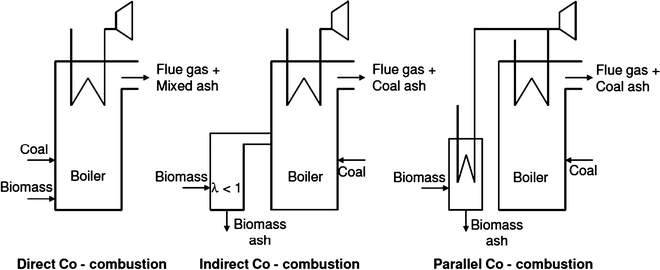
Among these, direct co-firing is attractive because it uses existing coal-fired plant infrastructure. But it also has the strictest fuel-quality requirements. If biomass pellets are not compatible with coal milling and combustion systems, power plants face technical barriers. These barriers include:
Mill choking
High moisture
Unstable combustion
Poor flame quality
Uneven particle size
Boiler efficiency loss
Fuel rejection
Storage degradation
Higher logistics cost
Lower co-firing reliability
Technical Problem with Raw Biomass Pellets
Raw biomass pellets are usually made from untreated agricultural residues such as paddy straw, cotton stalk, corn cobs, mustard stalk, groundnut shell, soybean stalk, and other crop wastes. These materials are valuable, but they are not naturally coal-like.
Coal is dense, dry, grindable, and suitable for pulverized combustion. Raw agricultural biomass is fibrous, variable, moisture-sensitive, and usually lower in energy density. This creates four major technical and commercial problems for coal-fired thermal power plants.
1. Lower Calorific Value
Coal-fired power plants require heat input. The boiler does not work on fuel mass alone; it works on useful energy. Indian coal has a wide calorific value range depending on grade, source, ash content, and moisture. Raw biomass pellets also vary widely, depending on feedstock and processing quality. Raw agricultural residue pellets may have lower and more variable GCV compared with coal. In some cases, the GCV may be around 3,800 - 4,200 kcal/kg. In lower-grade or high-moisture residues, it may be significantly lower. If a biomass pellet has a lower GCV than coal, the plant must burn more biomass by mass to deliver the same heat input. This creates a mass penalty. For a coal-fired power plant, that means more material handling, more storage requirements, more transport volume, and possible boiler performance concerns.
2. Moisture Sensitivity
Raw biomass pellets are often hygroscopic, meaning they absorb moisture from the atmosphere. This is a major problem for coal-fired thermal power plants because moisture reduces the useful heat value. Before the fuel contributes heat to the boiler, part of the boiler's energy is wasted in evaporating water. High moisture also causes:
Pellet swelling
Pellet breakage
Fungal growth
Storage degradation
Poor flowability
Higher rejection risk
Reduced combustion efficiency
Coal-fired power plants require predictable fuel behaviour. Moisture-sensitive pellets make co-firing less reliable.
3. Poor Grindability in Coal Mills
Most coal-fired thermal power plants use pulverized coal systems. Coal is ground into fine particles before being injected into the boiler. Raw biomass pellets do not grind like coal. They are fibrous and elastic. They can clog mills, produce uneven particle sizes, and disturb combustion stability. ven if the policy requires biomass co-firing, plant operators remain cautious if the fuel can damage equipment, reduce output, or create operational risk.
4. Supply Chain and Quality Inconsistency
Biomass pellet supply depends on seasonal crop residue availability, collection logistics, drying, processing, storage, and transportation. Coal-fired thermal power plants require a continuous fuel supply. A large thermal power station cannot depend on irregular, low-quality, or moisture-damaged pellets. Common supply-side challenges include:
Inconsistent feedstock
Low supplier capacity
High moisture
Poor pellet durability
Long transport distance
Storage losses
Quality rejection
Lack of long-term contracts
Limited torrefied pellet availability
Therefore, the success of biomass co-firing depends not only on policy mandates but also on fuel engineering and supply-chain maturity.
Gross CO2 vs Net CO2: The Accounting Distinction
Biomass is often described as carbon-neutral because the carbon released during combustion was recently absorbed by plants during growth. Under greenhouse-gas inventory methods, CO2 from biomass combustion is generally treated differently from fossil CO2. Biomass CO2 is reported separately to avoid double-counting with land-use and agricultural carbon accounting. However, this does not mean that no CO2 comes out of the chimney. This accounting distinction is important because reported fossil CO2 reduction and physical smokestack CO2 reduction are not always the same measurement.
When a biomass pellet is burned in a coal-fired power plant, it physically releases CO2. The distinction is whether CO2 is treated as fossil carbon or biogenic carbon in the inventory. Therefore, biomass pellet co-firing should be understood in two ways.
1. Net accounting basis
On a net inventory basis, replacing coal with biomass can reduce reported fossil CO2 emissions because biomass carbon is treated as part of the short-term biogenic carbon cycle.
2. Gross physical basis
On a gross smokestack basis, the boiler still emits CO2 when biomass is burned. The actual CO₂ per unit of electricity depends on fuel GCV, moisture, carbon content, boiler efficiency, auxiliary power, and transport energy.
A raw biomass pellet may help reduce reported fossil CO2 and avoid stubble burning, but it may not automatically reduce gross smokestack CO2 unless the fuel quality and combustion performance are strong.
Why Fuel Quality Decides the Real Impact
A coal-fired thermal power plant needs fuel that can deliver heat efficiently and reliably. If raw biomass pellets have lower GCV, higher moisture content, and poor grindability, they may require a higher mass flow rate for the same heat output. This can reduce the physical benefit of co-firing. A simplified comparison shows the issue:
Parameter | Coal | Raw Biomass Pellet |
Example GCV | 4,000 kcal/kg | 3,200 kcal/kg |
Moisture | Lower and predictable | Higher and variable |
Grindability | Suitable for coal mills | Fibrous and difficult |
Fuel mass for same heat | 1.0 kg | About 1.25 kg |
Boiler compatibility | Established | Limited at higher blends |
This does not mean biomass co-firing is useless. It means the real benefit depends on using a biomass pellet with suitable GCV, moisture, grindability, ash characteristics, and boiler compatibility. For coal-fired power plants, the preferred fuel should not be judged only by price per tonne. It should be judged by: Delivered cost per million kcal of useful heat, adjusted for moisture, grindability, handling, and boiler performance.
This is where torrefied biomass pellets become highly relevant.

What Is a Torrefied Biomass Pellet?
A torrefied biomass pellet is an upgraded biomass fuel produced through torrefaction.
Torrefaction is a mild thermal treatment process in which biomass is heated in an oxygen-deficient or oxygen-limited environment, typically around 250 - 300 °C.
During torrefaction:
Moisture is removed
Volatile compounds are partly released
The biomass becomes darker
The material becomes brittle
Grindability improves
Hydrophobic behaviour improves
Energy density increases
Coal-like handling behaviour improves
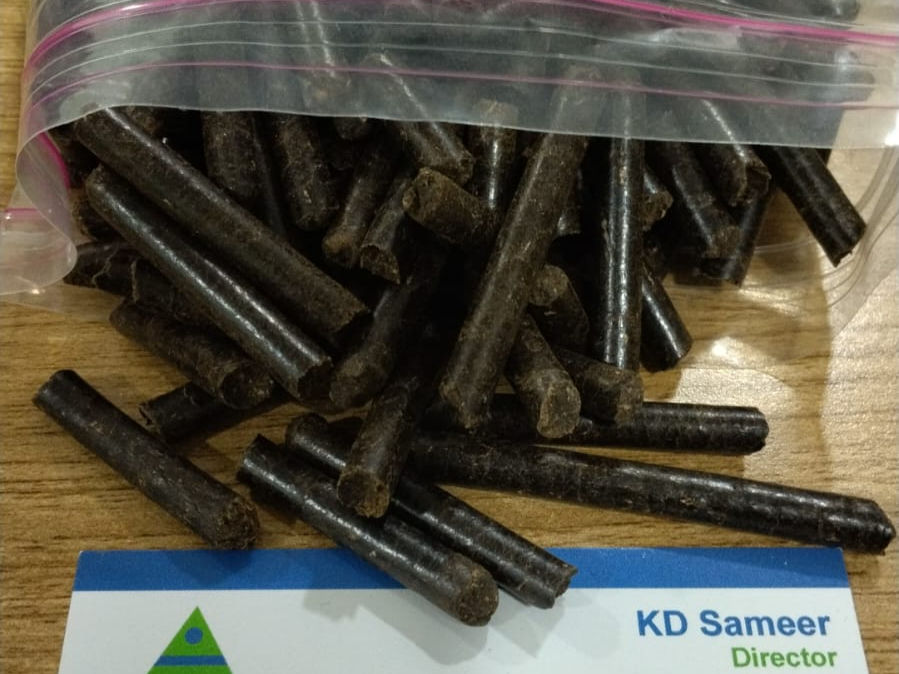
The final product is often called:
Torrefied biomass pellet
Black pellet
Bio-coal pellet
Torrefied pellet
Upgraded biomass fuel
For coal-fired thermal power plants, torrefied biomass pellets are more attractive because they behave more like coal than raw biomass pellets.
Raw Biomass Pellet vs Torrefied Biomass Pellet
Property | Raw Biomass Pellet | Torrefied Biomass Pellet |
Fuel type | Untreated compressed biomass | Thermally upgraded biomass |
Main power plant use | Limited co-firing | Higher-quality co-firing |
Appearance | Light brown, fibrous | Dark brown to black, coal-like |
Moisture behaviour | Absorbs moisture | More hydrophobic |
Grindability | Difficult in coal mills | Brittle and coal-like |
Energy density | Lower and variable | Higher and more stable |
Storage | Requires moisture protection | More stable during storage |
Logistics | Lower useful heat per truck | Higher useful heat per truck |
Boiler compatibility | Limited at higher blends | Better compatibility |
Co-firing potential | Usually lower | Higher technical potential |
External storage suitability | Limited, moisture-sensitive | Better, subject to pellet quality and rainfall protection |
The advantage of torrefaction is not only higher GCV. The real advantage is the combination of higher energy density, lower moisture, better grindability, and coal-like behaviour. That combination directly addresses the technical barriers faced by coal-fired thermal power plants.
How Torrefied Biomass Pellets Improve Coal-Fired Power Plant Co-firing
Torrefied biomass pellets improve co-firing performance in several ways.
1. Better Energy Replacement
Because torrefied biomass pellets have a higher calorific value than many raw biomass pellets, less fuel mass is required for the same heat input. This reduces handling load, transport burden, and boiler feed challenges.
2. Lower Moisture Penalty
Torrefied pellets are more hydrophobic and usually have lower moisture content. This reduces the energy wasted in evaporating water inside the boiler.
3. Better Coal Mill Compatibility
Torrefied biomass is brittle and easier to grind than raw biomass. This improves compatibility with coal pulverizers and reduces the risk of choking or uneven particle size.
4. Higher Co-firing Potential
Because torrefied biomass behaves more like coal, coal-fired plants can consider higher co-firing levels with lower operational risk.
5. Better Storage and Logistics
Higher energy density and improved moisture resistance make torrefied pellets more practical for long-distance transport and storage. This is especially important for NTPC and other coal-fired power plants that need a large, reliable, year-round fuel supply.
Does Torrefied Biomass Reduce Gross CO2, and How Does a Self-Sustainable Plant Improve Lifecycle Emissions?
Torrefied biomass pellets improve the gross CO2 equation compared with raw biomass pellets because they reduce the mass and moisture penalty. When combined with a self-sustainable torrefaction plant, the overall CO2 footprint is further reduced because external energy consumption is minimized.

A self-sustainable torrefaction plant utilizes the volatile gases released during the torrefaction process as an internal energy source. This eliminates or significantly reduces the need for external fossil fuel or grid electricity, which would otherwise contribute to indirect CO2 emissions.
CO2 Reduction from Self-Sustainable Operation
In a conventional torrefaction system, external energy is required for heating and processing. This energy typically comes from fossil fuels or grid electricity, contributing to additional CO2 emissions. In contrast, a self-sustainable torrefaction plant:
Uses internally generated syngas/volatiles for process heat
Minimizes or eliminates fossil fuel consumption
Reduces indirect CO2 emissions from electricity usage
Improves overall lifecycle carbon performance
Simplified CO2 Reduction Illustration
Let us consider a simplified comparison:
Parameter | Conventional Torrefaction | Self-Sustainable Torrefaction |
External energy requirement | High | Reduced to auxiliary-only level |
CO2 from external energy | Significant | Significantly reduced |
Net CO2 footprint of pellet production | Higher | Lower |
Assuming a conventional torrefaction/pelletization system consumes approximately 80-120 kWh of external electricity per tonne of biomass processed, and assuming India’s grid emission factor of approximately 0.70 kg CO2 per kWh, the indirect CO2 emission from electricity use is:
CO2 from electricity use = Electricity consumption × Grid emission factor
= 80-120 kWh/t × 0.70 kg CO2/kWh
= 56-84 kg CO2 per tonne of biomass processed
In a self-sustainable torrefaction plant, where process heat is generated internally from torrefaction gases and external energy demand is reduced mainly to auxiliary loads, this external-energy-related emission can be substantially reduced.
On this basis, the indicative CO2 reduction is approximately 56-84 kg CO2 per tonne of biomass processed, subject to actual auxiliary load, feedstock moisture, plant configuration, and operating conditions.
When torrefied biomass pellets produced from a self-sustainable plant are used in coal-fired thermal power plants:
The upstream CO2 burden from external process energy is significantly reduced, while auxiliary electricity, biomass collection, transport, handling, maintenance, and other lifecycle inputs should still be accounted for.
The effective carbon intensity of the fuel is reduced
The substitution of coal becomes more environmentally beneficial
Torrefaction makes biomass more suitable as a coal substitute, and when implemented through a self-sustainable plant, it significantly improves the lifecycle CO2 performance by significantly reducing indirect emissions from external process energy consumption. Raw biomass pellets may mainly support crop-residue management and avoid open-field burning.
Torrefied biomass pellets produced through self-sustainable processes can support a stronger and more carbon-efficient fuel-switching strategy in coal-fired thermal power plants.
EnviroChem’s Self-Sustainable Torrefaction Process
EnviroChem Services has developed a self-sustainable torrefaction process for producing torrefied biomass pellets from agricultural residues. The process is designed specifically to address the limitations of raw biomass pellets in coal-fired thermal power plant co-firing.

A major feature of EnviroChem’s process is energy self-sufficiency. The volatile gases released during torrefaction are captured and combusted within the system to provide process heat. This reduces the need for external thermal energy and improves the overall economics of torrefied biomass pellet manufacturing.
Based on EnviroChem’s internal design configuration, the process is intended to operate with very low auxiliary power demand compared with conventional thermal upgrading systems. Actual consumption depends on feedstock, moisture, plant configuration, capacity, and operating conditions. This makes the process suitable for decentralized biomass processing hubs near agricultural residue sources.
Why Self-Sustainable Torrefaction Matters for Coal-Fired Power Plants
Coal-fired power plants need a consistent fuel supply. If torrefied pellets are too expensive or energy-intensive to produce, they may not scale. A self-sustainable torrefaction process improves viability by using the energy contained in biomass volatiles to support the process itself. This can improve:
Net energy efficiency
Pellet manufacturing economics
Carbon performance
Rural deployment potential
Long-term fuel supply reliability
Cost competitiveness against coal and raw biomass pellets
For India, where agricultural residues are widely distributed, decentralized torrefaction plants can convert low-density raw biomass into high-quality torrefied biomass pellets near the source. This reduces the burden of transporting loose or low-quality raw biomass over long distances.
Mission SAMARTH Procurement Opportunity and the Need for Quality Pellets
The Mission SAMARTH procurement opportunity shows that coal-fired thermal power plants are becoming a major market for biomass pellets. However, the opportunity should not be viewed only as a quantity requirement.
Coal-fired thermal power plants need biomass pellets that can meet strict fuel-quality parameters, such as:
GCV
Moisture
Ash content
Chlorine content
Alkali content
Bulk density
Durability
Grindability
Hydrophobicity
Delivered cost per million kcal
Boiler compatibility
Supply reliability
For large coal-fired thermal power plants, procurement should gradually move from quantity-based biomass pellet purchasing to performance-based biomass fuel contracting.
If the market supplies only low-GCV, high-moisture, non-torrefied pellets, coal-fired power plants will continue to face operational hesitation. If the market supplies torrefied biomass pellets with coal-like properties, higher co-firing levels become more practical. This is why Mission SAMARTH creates a strong opportunity for advanced biomass pellet technologies such as torrefaction.
Why Coal-Fired Power Plants Should Evaluate Pellets by Energy Value, Not Tonnage
A common mistake is comparing coal and biomass pellets only by price per tonne. This is incomplete. A coal-fired power plant should evaluate fuel based on the useful heat delivered. The correct comparison should include:
INR per tonne
GCV
Moisture
Ash
Transport cost
Storage loss
Grinding behaviour
Boiler efficiency
Co-firing percentage
Rejection risk
Delivered cost per million kcal
A cheaper raw biomass pellet may become expensive if its moisture content is high, its GCV is low, or its rejection risk is high. A torrefied biomass pellet may appear costlier per tonne, but can become more attractive when assessed by useful heat value and operational compatibility. For serious coal substitution, the metric should be:
Delivered cost per million kcal of usable heat in a coal-fired boiler.
Secondary Applications Beyond Coal-Fired Power Plants
Although this article focuses on coal-fired thermal power plants, torrefied biomass pellets can also serve other industries that require solid fuel. Potential users include:
Cement plants
Lime kilns
Industrial boilers
Brick kilns
Steel reheating furnaces
Process heating systems
Waste-to-energy hybrid systems
Institutional heating systems
ESG-driven industrial fuel substitution projects
For these industries, the requirement is similar: they need a fuel that is storable, transportable, consistent, and compatible with existing combustion systems. Torrefied biomass pellets are better suited for such applications than untreated raw biomass.
The Way Forward for India
India’s biomass pellet co-firing policy has created an important direction. It has brought together farmers, biomass aggregators, pellet manufacturers, coal-fired power plants, regulators, and technology providers.
The goal should not only be to meet a percentage mandate. The goal should be to create a reliable biomass fuel ecosystem for coal-fired thermal power plants. This requires:
Quality-based pellet standards
Long-term procurement contracts
Decentralized biomass processing
Torrefaction technology deployment
Better storage infrastructure
OEM validation
Transparent delivered-energy pricing
Testing of GCV, moisture, ash, chlorine, and grindability
Integration with coal handling systems
Supply-chain financing
The next stage of India’s biomass co-firing program should focus not only on how many tonnes of biomass pellets are procured, but on how much reliable, boiler-compatible, low-moisture, high-GCV fuel is delivered to coal-fired thermal power plants.
India has a large agricultural residue availability. The challenge is not only biomass availability. The challenge is converting that biomass into a fuel that coal-fired power plants can confidently use.
Call to Action
Biomass pellet co-firing in coal-fired thermal power plants is an important opportunity for India. It can reduce open-field crop-residue burning, support rural income, create a biomass-based industrial fuel market, and partially replace coal in thermal power generation. However, the real success of this approach depends on fuel quality.
By converting agricultural residue into a dry, brittle, hydrophobic, energy-dense, coal-like fuel, torrefaction makes biomass co-firing more practical, reliable, and technically defensible for coal-fired thermal power plants.
Mission SAMARTH and NTPC procurement opportunities show that India is building a market for biomass pellet co-firing. The next step is to ensure that this market is supplied with high-performance biomass fuel, not only low-cost raw pellets.
EnviroChem’s self-sustainable torrefaction process is designed around this need: upgrading agricultural residue into high-quality torrefied biomass pellets suitable for cleaner, more reliable co-firing in coal-fired thermal power plants.
EnviroChem Services provides technology solutions for torrefied biomass pellet production, biomass processing, environmental engineering, and sustainable industrial fuel systems.
EnviroChem Services is committed to Engineering Environment for Better Tomorrow through practical, scalable, and commercially viable environmental technologies.
References
Ministry of Power, Government of India - Mission SAMARTH: Sustainable Agrarian Mission on Use of Agri-Residue in Thermal Power Plants.
National Mission on Use of Biomass in Thermal Power Plants - Vision, objectives, vendor registration, tender links, and biomass pellet procurement information.
Mission SAMARTH outreach material - Biomass pellet procurement opportunities for NTPC Limited locations, including Sipat, Sundargarh, Gadarwara, Mouda, and Chatra.
Central Electricity Authority / Ministry of Power - Biomass co-firing policy and technical guidance for coal-based thermal power plants.
Commission for Air Quality Management, Directions and compliance actions related to biomass pellet co-firing and crop-residue utilization.
IPCC-2006 Guidelines for National Greenhouse Gas Inventories, Volume 2: Energy, Chapter 2: Stationary Combustion.
Technical literature on biomass torrefaction, pelletization, hydrophobicity, grindability, calorific value improvement, and biomass-coal co-firing behaviour.
EnviroChem Services (OPC) Pvt. Ltd. - Internal technical data on self-sustainable torrefaction process configuration and torrefied biomass pellet production.


Comments